In the United States, halal multivitamins provide Muslims a straightforward way to support daily wellness. These products are pure, dependable, and full of essential nutrients. They support energy, immunity, and overall health.
Click to View Premium Halal Vitamins for Everyday Health
This article explores the importance of halal certification and what to look for in halal vitamins. It further walks through how to make daily wellness vitamins part of your routine. We point to trusted U.S. market options and how brands use Instagram and e-commerce tools to connect with customers.
This guide provides useful advice on certification, key nutrients, and label reading. Whether your goal is to find Halal Multivitamins for Daily Wellness or trustworthy daily halal multivitamins, this guide seeks to make your decisions easier and more confident.
Understanding Halal Multivitamins For Daily Wellness
Picking the right daily vitamins means balancing personal health needs with religious practices. Halal-certified options make it possible for consumers to follow Islamic dietary rules while still getting essential nutrients. In this section, we explain what halal certification involves, how it stands apart from general supplement standards, and why these products are important for everyday use.
Definition And Value Of Halal-Certified Vitamins
Halal-certified vitamins are nutritional products that comply with Islamic dietary law. Certifiers check ingredient sources to ensure that alcohol and non-halal animal derivatives, including pork gelatin, are not used. Recognizable halal logos on the package show that a trusted authority has reviewed both the ingredients and the manufacturing process. For many Muslims, using halal vitamins provides peace of mind and supports their nutrient intake.
How Halal Certification Differs From General Supplement Standards
In the United States, dietary supplement standards under DSHEA mainly focus on labeling and safety claims. Halal certification, however, adds another level of scrutiny involving ingredient sourcing and supplier documentation. Independent Islamic certifiers such as IFANCA review supply chains, hygiene practices, and controls against cross-contamination. Brands may carry both GMP certification and halal seals to show compliance with quality requirements and faith-based standards.
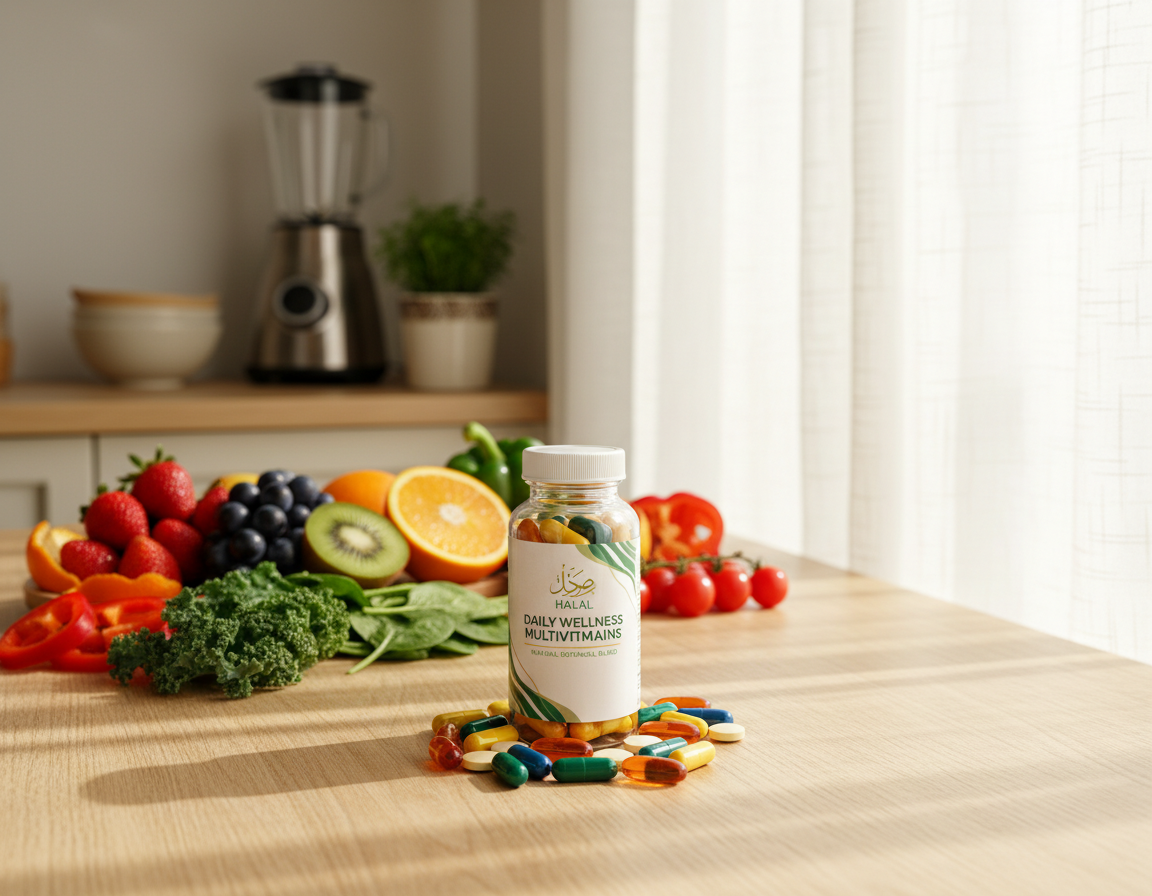
Why Halal Vitamins Matter In Muslim Dietary Laws And Daily Routines
Halal-marked Muslim dietary supplements help observant users maintain nutritional adequacy without compromising their beliefs. Individuals often seek halal vitamins during Ramadan or for daily immune support. On social media and online marketplaces, retailers and brands prominently feature halal certification so shoppers can discover products more easily.
- Look for clear halal logos and verify the certifier’s reputation.
- Balance halal supplements with standard safety checks like third-party testing.
- Review the product form and ingredient sources to avoid hidden non-halal components.
Important Nutrients In Halal Vitamins And Their Benefits
Understanding the vitamins and minerals in halal supplements is key. This helps shoppers choose products that suit their health needs. In this section, we cover important nutrients, their functions, and the way special formulas are designed for different groups.
Core Vitamins And What They Do
Vitamin A plays an important role in vision, immune function, and the health of skin and mucous membranes. It is an important part of any balanced formula aimed at supporting eye health.
The B-complex group—B1, B2, B3, B6, B12, and folate—supports energy metabolism and healthy nervous system function. They also contribute to red blood cell formation. For women planning pregnancy, folic acid is particularly important.
Vitamin C is a strong antioxidant that aids in collagen production and boosts immunity. Vitamin D is important for both bone health and immune function. Because of limited sun exposure, many adults in the U.S. require supplementation.
Through its antioxidant effects, vitamin E helps defend cell membranes and support healthy skin.
Important Minerals Included In Many Halal Formulas
Iron supports oxygen transport in the blood and helps reduce the risk of anemia. Women of childbearing age often require iron supplements to replace monthly iron losses.
Zinc plays a vital role in immunity, wound healing, and DNA production. Because of its many benefits, zinc is commonly included in halal multivitamins.
Magnesium aids muscle and nerve function, supports sleep, and is involved in energy metabolism. It works well alongside B-vitamins in daily wellness formulas.
Specialized Formulas For Men, Women, And Different Ages
Men’s formulas focus on B-vitamins, vitamin D, zinc, and nutrients for energy and prostate health. Such halal vitamins are tailored specifically for men’s health needs.
Blends for women often contain iron, folate, calcium, vitamin D, and several B-vitamins. They are intended to support menstrual wellness, pregnancy preparation, and bone health. Selecting halal vitamins for women also helps ensure compliance with halal standards.
Children benefit from chewable or gummy options with age-appropriate doses. Seniors often require more vitamin D, B12, and calcium in halal multivitamins to reduce the risk of deficiency.
- As you compare products, review dosage levels and see whether the formulas match age and sex requirements.
- Look for plant-based or synthetic nutrient sources and gelatin-free capsules to support halal compliance.
- Product pages from major retailers usually show nutrient breakdowns and targeted claims that can help shoppers choose suitable daily wellness vitamins.
How To Select Quality Halal Supplements
Choosing reliable halal supplements involves a checklist. Look for visible certification logos from trusted bodies like IFANCA or Islamic Services of America on the label. The certifier’s name should be easy to identify, and the ingredient list should be checked for alcohol or pork-derived components. Opt for products with plant-based or vegetable cellulose capsules.
Reading Labels For Halal Certification And Ingredient Safety
Make sure the packaging displays certified badges and the certifier’s full name. The label should also show active ingredient amounts, percent daily values, and allergen details. Watch out for hidden enzymes or excipients that could be derived from non-halal sources. Ingredients such as hypromellose or pullulan often indicate gelatin-free, plant-based capsules.
Third-Party Testing And Potency Standards
Halal certification does not replace quality testing. Look for third-party seals from USP, NSF International, or ConsumerLab when available. It is helpful when manufacturers publish Certificates of Analysis and mention GMP compliance. Batch testing and heavy metal screening help confirm the potency and purity of halal health products.
Allergies, Vegan Needs, And Gelatin-Free Considerations
Everyday use requires careful attention to allergies and dietary preferences. Check allergen statements for dairy, eggs, or fish-derived ingredients. Vegan shoppers should choose products that are clearly labeled plant-based. Gelatin-free formulas, often made with HPMC or pullulan, work well for people with strict dietary rules.
- Verify that both the halal logo and certifier name appear on the pack.
- Confirm the presence of GMP badges and third-party testing seals or COAs.
- Read the full ingredient list and allergen statements before making a purchase.
- Pick gelatin-free or vegan capsule options when your needs require them.
If you shop online, retailer coupons, referral codes, and loyalty discounts can help reduce costs. Many brands also post label images and ingredient highlights on Instagram to improve transparency. These steps can help you find safe and transparent halal multivitamins for daily wellness that fit your needs.
How To Integrate Halal Vitamins Into Your Daily Routine
Incorporating daily halal multivitamins into your routine is key for maintaining nutrient balance and supporting long-term wellness. Simple habits like taking supplements with meals, tracking doses, and checking medication interactions help ensure Muslim dietary supplements are both safe and effective.
Recommended Timing And Interactions With Meals Or Medications
To help absorption, take fat-soluble vitamins like A, D, and E with a meal that includes some dietary fat. Many find breakfast or dinner to be the most convenient times.
Iron absorbs best on an empty stomach or with vitamin C. Still, iron may cause stomach irritation in some people. If nausea occurs, take iron with food and avoid high-calcium meals at the same time.
Certain supplements may interact with prescription medications. For example, vitamin K can influence the way warfarin works, and high doses of vitamin E may affect blood thinners. Always consult a clinician or pharmacist before starting any new product.
General Dosage Guidance For Adults And Children
Always follow the label for dosing. Most adult multivitamins are intended to be taken once a day. Children, on the other hand, require age-appropriate formulations and doses tailored for their growth and safety.
Excessive amounts of fat-soluble vitamins should be avoided unless recommended by a healthcare provider. Providers may recommend higher doses of vitamin D or B12 if lab results indicate a deficiency.
Select trusted halal vitamins that provide clear dosing directions. Doing so makes it easier to choose a product that fits your needs and prevents overuse.
How To Monitor Results And When To Seek Medical Advice
Track shifts in energy, skin health, digestion, or mood across a period of weeks. If needed, use lab tests like iron studies or 25-hydroxy vitamin D levels to measure progress.
If you are pregnant, breastfeeding, taking prescription drugs, or living with a chronic illness, speak with a healthcare provider before starting supplements. Regular check-ins help tailor daily wellness vitamins to your real health needs.
- Maintain a consistent schedule and consider using a pill organizer for better adherence.
- Check labels carefully and verify halal certification when choosing Muslim dietary supplements.
- If you are unsure, use lab testing and professional advice to adjust dosing safely.
Daily Wellness With Halal Multivitamins
Finding the right halal multivitamins for daily wellness starts with understanding the options available in U.S. stores. There are various types, from once-daily adult formulas to single-nutrient supplements. For children, parents can choose gelatin-free chewables and gummies, while pregnant women can look for halal prenatal vitamins with folate and iron.
Popular types in the U.S. market
- Once-daily complete multivitamins for adults, including specific formulations for men and women and senior blends.
- Halal prenatal and postnatal vitamins made to support pregnancy and breastfeeding.
- Children’s halal gummies and chewables formulated without pork-derived gelatin.
- Targeted halal supplements containing single nutrients such as vitamin D, B12, iron, and zinc.
Trusted halal brands and health products
Many well-known manufacturers now offer halal-certified lines. Look for brands with halal certification marks and GMP compliance on their labels. Certifications from bodies like IFANCA verify claims. Many brands share certification details and customer reviews on Instagram and official websites to promote transparency.
Where to find halal vitamins for Muslims
Pharmacies in diverse communities, including both chain and independent stores, often carry halal vitamins. Specialty halal markets and Islamic groceries also stock these products, allowing for label inspection. Online platforms like Amazon, iHerb, and brand storefronts offer a wide selection with detailed product information.
Useful shopping tips
- Confirm halal certification on the exact SKU before purchase.
- Look for third-party testing indicators and GMP badges to confirm quality.
- Read customer reviews and use retailer support to ask about ingredient sourcing.
Choosing halal vitamins for men, women, or Muslim families is a thoughtful move toward better health. When labels are checked carefully and products are bought from trusted retailers, incorporating halal multivitamins into daily life becomes much easier.
Closing Thoughts
Halal Multivitamins for Daily Wellness provide a practical option for Muslims living in the United States. They help meet nutrient needs while respecting religious dietary laws. By opting for halal multivitamins with verified certification and clear ingredient lists, individuals can harmonize their faith and health. This approach ensures they don’t compromise on quality.
Shoppers should prioritize third-party testing and choose multivitamins with nutrient profiles that fit age and sex needs. Opt for gelatin-free or plant-based formulations when necessary. Look for products that clearly show the certifier’s logo on the label. Also make sure they provide transparent manufacturing details to support potency and safety.
Careful label review is essential when selecting halal vitamins. Speak with a healthcare provider for personalized dosing advice. It is best to purchase from trusted sources like pharmacies, established online marketplaces, or brand sites. These platforms often provide certification proof and customer support. Many halal supplement brands also use Instagram and e-commerce features to share updates and certification documents. This makes it easier for shoppers to verify authenticity.
A well-informed approach should balance faith-based needs with evidence-based nutrient choices. With proper research and professional guidance, daily wellness vitamins can become an effective part of a balanced routine. This can support long-term health.
Related: What To Look For On Labels Of Halal Multivitamins For Kids