Multimeter Uses: Key Functions Clarified
The average multimeter can measure up to 20V in voltage levels. In contrast, a lot of electronic builds and prototype projects operate on currents under 200mA. This fact underscores the critical role multimeters play in electrical testing and troubleshooting. Being confident in using a cen tech 7 function multimeter matters for professionals and for students who are studying electrical principles.
Multimeters are highly versatile tools, giving accurate readings of voltage, current, and resistance. This article will explore the many roles and functions of a multimeter. The goal is to give you the know-how to use this essential tool effectively in your electrical projects and experiments.
Key Takeaways
- Multimeters are key instruments for measuring voltage, current, and resistance.
- Knowing how to apply a multimeter is vital for efficient troubleshooting.
- Digital multimeters are widely used because they offer clear and precise readings.
- It is vital to follow safety precautions whenever you use a multimeter for electrical testing.
- Continuity testing is an important feature for checking electrical connections.
- Picking an appropriate multimeter can strongly influence the speed and accuracy of your tests.
Introduction To Using Multimeters
A multimeter is indispensable for diagnosing electrical problems and ensuring devices work correctly. It measures various electrical properties, essential for both experts and hobbyists.
What is a Multimeter?
At its core, a multimeter brings together tools that measure voltage, current, and resistance. This combination is very helpful for diagnosing and fixing electrical problems. Available in analog and digital versions, multimeters are crucial. Analog models use a needle and scale for measurement, whereas digital ones show values on a display. They test wall outlets, batteries, and other electronics.
When it comes to electrical testing, the multimeter plays a central role. You can use it to confirm circuit continuity and uncover problems across a range of situations. For example, in automotive work, it is used to check battery voltage and sensor signals. It also helps keep industrial machinery running correctly, reducing the risk of costly breakdowns.
Multimeters are vital test tools that measure AC and DC voltage, current, and resistance. Their ability to handle diverse tasks makes them invaluable for both simple and complex projects.
Multimeter Types Explained
Understanding the various types of multimeters is crucial for successful electrical testing. They are usually divided into two categories: analog multimeters and digital multimeters. Both come with unique strengths and useful traits. Your choice will depend on what you need to measure and how you like to work.
Analog Multimeters
Analog multimeters feature a needle pointer and dial display. They work very well for watching quick changes in readings. Their design lets users see changes as they happen. Analog devices boast a sensitivity range typically between 1,000 to 50,000 ohms per volt, with the peak sensitivity reaching up to 20,000 Ω/V. This made them favorites for radio technicians in the mid-20th century.
Digital Multimeters
Digital multimeters are very popular thanks to their high precision and extensive features. Their LCDs present measurements clearly and can show up to four digits. They are capable of measuring different parameters such as voltage, resistance, and temperature. Higher-end units may add auto-ranging, logging capabilities, and even wireless features. These features make them an excellent choice for complex work such as automotive diagnostics and renewable energy systems.
Comparison of Analog and Digital Multimeters
Choosing between analog and digital multimeters depends on your specific needs and budget. The following table highlights their main differences:
| Feature | Analog Multimeters | Digital Multimeters |
|---|---|---|
| Type Of Display | Needle pointer on dial | Numeric display (LCD) |
| Measurement Accuracy | Reasonable but generally less precise | Very accurate with high resolution |
| Response Time | Responds quickly to changing values | Depends on sampling rate |
| Typical Uses | Best for rapidly changing values | Very versatile and used in many industries |
| Price Range | Generally lower | Can cost more, depending on features |
Although both multimeter types are essential for electrical testing, digital multimeters’ precision and power have made them more popular among users in both consumer and professional spaces.
Components of a Multimeter
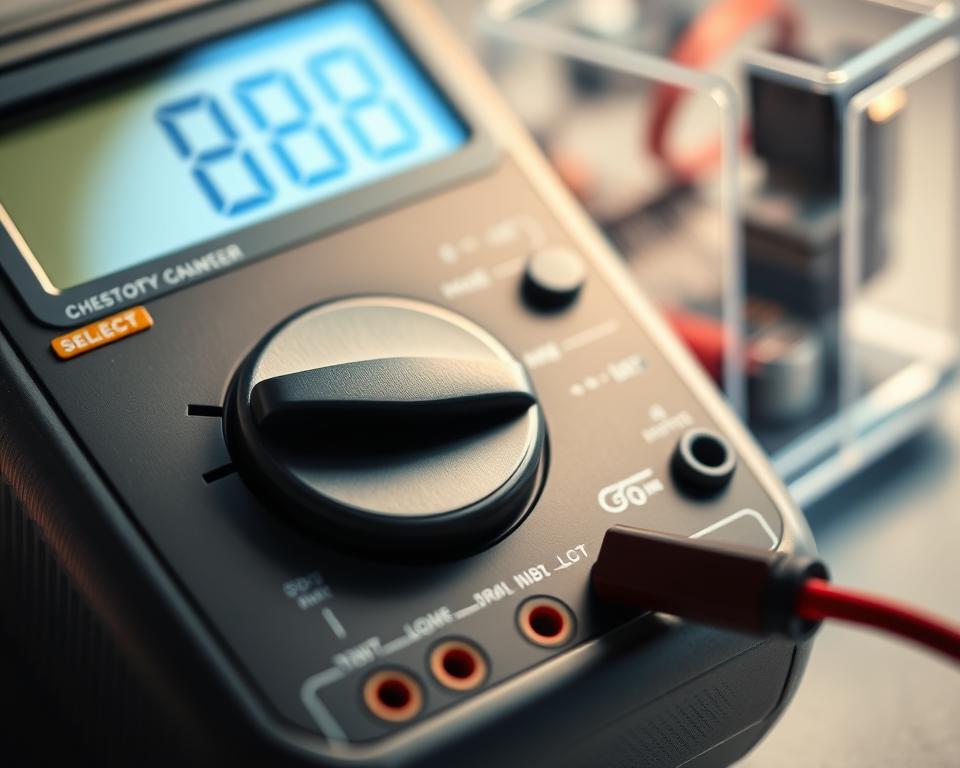
Understanding the main parts of a multimeter is crucial if you want to use it effectively. A multimeter consists of a few primary components, each serving a particular function. The display provides readings, while the selection knob lets users toggle between functions like voltage, current, and resistance. The probes, which link the meter to the circuit you are testing, are also a critical feature.
Key Parts and Their Functions
The essential parts of a multimeter are divided into:
- Display Panel – Shows measurement results in real-time for easy data interpretation.
- Selection Knob – Lets users choose the measurement type, including voltage, current, or resistance functions.
- Ports: Usually three, but some models have four, for connecting various probes.
- Test Probes – Vital for linking the multimeter to electric circuits, with red for positive and black for ground connections.
How Multimeter Probes Work
Probes play a fundamental role in multimeter operation. They come in several forms, including standard pointed probes and alligator clip attachments. The red probe usually connects to the measurement port, while the black probe serves as the common or ground. Using alligator clips simplifies tasks involving several components, improving measurement precision and efficiency.
Using The Multimeter Selection Knob
The selection knob is central to moving between the different features of the multimeter. Turning the knob lets you swap between AC/DC voltage ranges, current ranges, and resistance settings. Selecting the correct setting is essential to obtain accurate readings. Users must exercise caution with the range setting to prevent device damage or inaccurate results.
If you work with electrical testing, understanding what a multimeter can do is essential. They supply key measurements that help you accurately evaluate components. They measure voltage, test current, and check resistance, making them vital for both professional use and DIY projects.
Measuring AC and DC Voltage
Measuring both AC and DC voltage is a primary function of multimeters. They can deliver precise readings and detect even small changes in voltage. This is essential for ensuring that electrical devices operate safely within their voltage limits.
Measuring Current Accurately
Assessing electrical flow in circuits is another key role of multimeters, applicable to both AC and DC. By measuring current, you can ensure components run safely and efficiently, which is vital in automotive diagnostics and industrial upkeep.
Measuring Resistance
Resistance measurement is used to test whether components like resistors and certain parts of circuits are functioning correctly. Multimeters can measure resistance up to several megaohms, which is key for evaluating circuit integrity and performing continuity tests.
Continuity Testing Capabilities
Continuity testing is a crucial function when troubleshooting circuits. It uses audible beeps or visual signals to indicate electrical connections. By confirming proper connections, continuity testing makes troubleshooting quicker and more effective.
| Key Function | Description | Application |
|---|---|---|
| Measuring Voltage | Measures AC and DC voltage with high accuracy. | Assessing the performance of power supplies in various devices. |
| Measuring Current | Assesses flow of electricity in circuits. | Checking battery voltage and sensor functionality. |
| Resistance Measurement | Tests the functionality of circuit components. | Ensuring resistors and diodes are within tolerance levels. |
| Continuity Testing | Verifies that a continuous electrical path exists. | Locating breaks and faults in circuit wiring. |
Safe And Effective Multimeter Use
Understanding how to use a multimeter is vital for anyone involved with electrical systems. Proper procedures ensure safety and measurement accuracy. When measuring voltage, current, or resistance, each step requires certain precautions.
Key Safety Tips
It is critical to learn the safety rules before operating a multimeter. Your multimeter should be rated for your work environment. Statistics suggest that over 30% of electricians rely on under-rated tools, which is dangerous. For safe operation, always double-check that the multimeter is on the correct setting before connecting the probes.
To prevent electric shock, avoid direct contact with live circuits, particularly during current measurements. Whenever you work on circuits above 50V, you should use appropriate PPE for added safety.
Steps for Measuring Voltage
Voltage measurement requires careful attention to detail. Begin by setting the multimeter to the correct voltage type and range, whether AC or DC. Then, plug the probes into the common port and the voltage measurement port. Finally, position the probes on the correct test points in the circuit.
Seeing 0 volts when testing from ground to neutral might show a wiring problem, highlighting multimeter safety importance.
Steps for Measuring Current
Current measurement is more involved than voltage. To measure current, you open the circuit and place the meter in series so the current flows through it. Select the proper current range on the meter, either in amps or milliamps depending on the expected value. Then connect the probes firmly between the two open ends of the circuit.
Always watch the display for warning icons or high readings, especially when values exceed 30 volts.
Steps for Testing Resistance
If you want a precise resistance reading, remove the component from the rest of the circuit. Set the multimeter to its resistance (ohms) setting and attach the probes across the component. A matching reading means the component works well; otherwise, it might be defective. Taking these steps helps protect the meter and ensures that you analyze the electrical behavior correctly.
Common Multimeter Applications
Whether in the workshop or at home, multimeters are essential tools for numerous jobs. Their strength lies in troubleshooting circuits, adding to their importance. These tools help you find faults and repair them, ensuring your systems function properly.
Using A Multimeter For Troubleshooting
Multimeters primarily help in diagnosing electrical circuit issues. Technicians and DIY enthusiasts rely on them to pinpoint problems. They measure voltage, current, and resistance to spot faulty components, helping keep systems safe and efficient.
Testing Batteries And Power Supplies
One of the most common uses for a multimeter is testing batteries. They measure the battery’s voltage level to determine charge state in automotive or household applications. This lets you decide whether a battery is still good or needs replacement, which helps with better energy management.
Verifying Circuit Integrity
For safety and performance, checking circuit integrity is key. Multimeters do this by measuring resistance and running continuity tests. They detect issues like broken wires or defects, prompting timely fixes. Overall, multimeters improve installation safety and make troubleshooting easier.
Choosing the Right Multimeter for Your Needs
Selecting the right multimeter can greatly improve your efficiency in electrical testing. Important factors include accuracy, available measurement functions, portability, and ease of use. Unlike analog meters, digital multimeters excel in functionality, favored by technicians and hobbyists.
Key Factors To Consider
Essential factors in selecting a multimeter include:
- Accuracy – Digital multimeters provide high precision, detecting changes down to 1 millivolt.
- Measurement Ranges – Look for a multimeter that supports a wide range of voltage, current, and resistance measurements.
- Portability – A smaller, easy-to-carry multimeter is helpful when you need to travel or work on site.
- Usability: Features such as auto-ranging and a backlit display improve usability.
Popular Models: Cen-Tech 7 Function Digital Multimeter
One well-known option is the Cen-Tech 7 Function Digital Multimeter, which combines versatility with a modest price. It includes the essential features that appeal to both beginners and experienced users. It also provides auto-ranging, which simplifies taking measurements and speeds up your work.
With a count capacity of up to 20,000, it delivers precise readings across a wide range of electrical tasks. It excels in troubleshooting, automotive tests, and battery checks. Its blend of valuable features and easy handling makes the Cen-Tech 7 Function Digital Multimeter a top pick for a new investment.
Final Thoughts
Having a solid grasp of multimeter functions is essential when you handle electrical work. We’ve encapsulated multimeter roles, highlighting their importance in testing and safety. The precision they offer in measuring voltage, current, and resistance makes them indispensable. Thus, multimeters are crucial for both professionals and enthusiasts.
These tools do more than simply show readings. Some units add advanced functions, including data logging and wireless communication. With these features, you can use multimeters in many areas, including vehicle diagnostics and renewable energy systems. Their continuity and frequency test options also help pinpoint defects, making sure systems operate smoothly.
Now that you know more, you can apply multimeter knowledge for precise troubleshooting and improved safety. They can also boost the efficiency of electrical setups and maintenance. Essentially, multimeters’ adaptability renders them irreplaceable in achieving meticulousness in electrical jobs.
Common Questions
Which Functions Does A Multimeter Primarily Provide?
A multimeter primarily measures voltage (AC and DC), current, and resistance. It is additionally used for continuity testing. Together, these functions are crucial for diagnosing problems and assessing overall circuit condition.
How do I choose between an analog and a digital multimeter?
Deciding between analog and digital options comes down to your specific requirements. Analog types are great for showing swift changes in value. In contrast, digital models provide precise numeric readings. This makes them preferred for daily tasks.
What Safety Steps Should I Follow When Using A Multimeter?
When using a multimeter, always select the correct setting before connecting. Never touch bare live conductors during current measurements. Also, disconnect parts before resistance tests to avoid inaccurate readings.
Is It Possible To Test Batteries With A Multimeter?
Absolutely, multimeters are often used to test batteries. They measure the battery’s voltage to indicate its charge level. That way, you can make sure your batteries are dependable for whatever you are powering.
What is continuity testing, and why is it important?
Continuity testing uses a multimeter to confirm that an electrical path is complete in a circuit. It’s crucial for finding and fixing breaks. This process helps keep your electrical setups functioning as intended.
What are the typical components found in a multimeter?
Typically, a multimeter is made up of a display, a function selector knob, multiple probe jacks, and the probes themselves. The probes make contact with the circuit being analyzed.
How does the Cen-Tech 7 Function Digital Multimeter compare to other models?
The Cen-Tech 7 Function Digital Multimeter is easy to use and offers versatile functions, including auto-ranging. Because it is reasonably priced, it suits both professional technicians and DIY enthusiasts.